What happens when one missing tooth starts affecting more than just your smile? A gap can change the way you chew, speak, and clean your teeth. Over time, nearby teeth may also shift toward the open space, which can affect your bite. For patients looking for a fixed tooth replacement option, dental bridges can restore function and help bring balance back to the smile. At Family Dentistry of Stuart, dental bridges in Stuart, FL are designed to look natural, feel stable, and support everyday comfort.
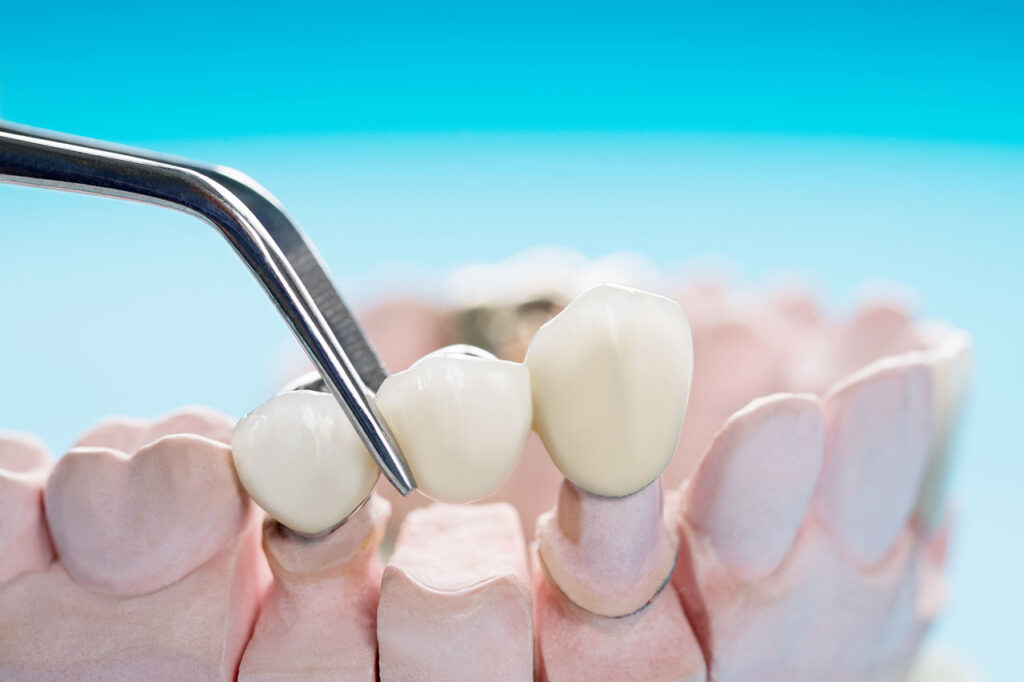
A dental bridge replaces one or more missing teeth by using neighboring teeth or dental implants for support. The replacement tooth, called a pontic, fills the open space while the supporting parts hold it in place. Unlike removable dentures, a bridge stays in the mouth and is cared for as part of your daily oral hygiene routine.
Because missing teeth can affect more than appearance, it is helpful to understand how dental bridges work, when they may be recommended, and how they compare with other tooth replacement options. With the right plan, a bridge can help restore chewing ability, protect your bite, and make your smile feel complete again.
What Is a Dental Bridge?
A dental bridge is a custom restoration that fills a gap left by a missing tooth or missing teeth. Traditional bridges usually use crowns on the teeth next to the gap as anchors. These anchor teeth are called abutment teeth. Between them, the pontic replaces the missing tooth. Once the bridge is placed, it is fixed in position and does not come in and out like a removable appliance.
There are several types of dental bridges. A traditional fixed bridge is one of the most common options and is often used when there are healthy teeth on both sides of the gap. A cantilever bridge may be used in select situations when support is available on only one side. A resin-bonded bridge may be considered for certain front tooth cases where chewing forces are lighter. In addition, implant-supported bridges may be used when dental implants provide the foundation.
The best type of bridge depends on your oral health, the location of the missing tooth, gum condition, bite strength, and the condition of neighboring teeth. Therefore, a consultation is important. Your dentist can evaluate whether a bridge is the right choice or whether another option, such as dental implants or dentures, may better match your goals.
Material selection also matters. Many bridges are made from porcelain, ceramic, zirconia, porcelain fused to metal, or other durable dental materials. The goal is to create a restoration that can handle chewing while blending naturally with the rest of your smile.
Why Replacing a Missing Tooth Matters
When a tooth is missing, the surrounding teeth may begin to move into the empty space. This movement can create new gaps, crowding, or bite changes. As a result, chewing forces may become uneven. Over time, certain teeth may take on extra pressure, which can increase wear or discomfort.
A missing tooth can also make cleaning harder. Food may collect in the open space, and shifted teeth can create tight or awkward areas for flossing. Therefore, replacing a missing tooth may help support better hygiene and reduce the risk of future problems.
Chewing is another major reason to consider dental bridges. When teeth are missing, patients may chew mostly on one side or avoid certain foods. However, uneven chewing can strain other teeth and jaw muscles. A bridge helps restore a more complete biting surface, which can make meals easier and more comfortable.
There is also a speech component. Teeth help guide the tongue when forming certain sounds. Depending on which tooth is missing, speech may feel different. While not every missing tooth causes speech changes, replacing the tooth can help restore normal tongue contact and confidence when speaking.
How Dental Bridges Support Comfort, Function, and Smile Balance
Dental bridges offer several practical advantages. First, they are fixed in place, so they do not need to be removed for daily activities. This can feel convenient for patients who prefer a stable option. In addition, bridges can be designed to match the color and shape of nearby teeth, which helps create a natural-looking result.
Second, dental bridges help distribute chewing forces. By filling the gap, the bridge can reduce the tendency to overuse other teeth. This may help protect the bite and make eating feel more predictable. Meanwhile, the bridge can prevent neighboring teeth from drifting into the empty space.
Third, a bridge can help support facial and smile symmetry. A missing tooth can change the way the lips and cheeks rest, especially when several teeth are missing. While every case is different, replacing missing teeth can help restore a more balanced appearance without making the smile look artificial.
Finally, dental bridges can be a helpful option for patients who are not ready for implants or who may not be candidates for implant surgery. However, bridges do require healthy support from neighboring teeth or implants. Therefore, your dentist will carefully evaluate the foundation before recommending treatment.
What to Expect During the Dental Bridge Process
The dental bridge process starts with an exam and treatment planning. Your dentist will evaluate the missing tooth space, surrounding teeth, gums, bone levels, and bite. X-rays may be recommended to assess the supporting structures. If the teeth next to the gap need treatment, such as fillings or crowns, that care may be planned before or during the bridge process.
For a traditional bridge, the supporting teeth are prepared for crowns. This means the teeth are shaped so the bridge can fit securely over them. Then, impressions or digital scans are taken and sent to a dental lab, where the custom bridge is created. A temporary bridge may be placed to protect the area while the final restoration is made.
At the final visit, your dentist checks the bridge for fit, bite, color, and comfort. Adjustments may be made before the bridge is cemented. Once it is in place, your bite should feel stable. However, it may take a little time to adjust to the new restoration, especially if the tooth has been missing for a while.
If anything feels high, sore, loose, or uncomfortable after placement, schedule a follow-up. Small adjustments can often improve comfort quickly. In addition, your dental team will show you how to clean under and around the bridge so you can protect the supporting teeth.
How to Care for a Dental Bridge
A dental bridge can last for many years with proper care, but daily hygiene is essential. Brush twice a day and floss daily. Because the replacement tooth is connected to the crowns, you will need a special technique to clean underneath the bridge. Your hygienist may recommend floss threaders, super floss, interdental brushes, or a water flosser.
Keeping the supporting teeth healthy is the key to bridge success. Even though the bridge material cannot decay, the natural teeth underneath the crowns can still be affected by cavities or gum disease. Therefore, cleaning around the margins and gumline is very important.
In addition, avoid chewing very hard objects such as ice, hard candy, or pens. If you grind or clench your teeth, ask your dentist whether a nightguard would help protect the bridge. Bite pressure can affect both natural teeth and restorations, so protecting your dental work can extend its lifespan.
Routine dental visits are also important. During checkups, your dentist can evaluate the bridge, supporting teeth, gums, and bite. If a problem begins, early care may help prevent the need for larger treatment. Therefore, bridge maintenance should be part of your regular dental plan.
Ready to Close a Smile Gap in Stuart, FL?
Dental bridges can replace missing teeth, improve chewing comfort, protect bite alignment, and restore a natural-looking smile. If you have a gap that affects your confidence, comfort, or daily routine, a bridge consultation can help you understand your options.
Ready to explore dental bridges in Stuart, FL? Contact Family Dentistry of Stuart at (772) 287-8225 to Book an Appointment and learn whether a dental bridge is the right solution for your smile.