Full arch dental implants replace most or all of the teeth in one or both jaws with a complete set of replacement teeth anchored to a small number of implant posts. For people in Stuart, FL living with failing teeth or loose dentures, this approach can restore the ability to eat, speak, and smile with confidence.
Dr. Jesus A. Mendez has training in dental implants and full-arch rehabilitation, including the All-on-X treatment concept. At Family Dentistry of Stuart, he and our team use CBCT imaging to plan each full-arch case around your bone and your goals.
“Full-arch treatment is a big decision, so I want patients to understand every option. We look at the bone, the gums, and how the new teeth will function before recommending a design.” — Dr. Mendez
How Full Arch Dental Implants Work
Full arch dental implants replace an entire row of missing teeth by anchoring a custom-made prosthetic arch to several titanium implant posts. The posts act as artificial tooth roots and are placed directly into the jawbone. After the bone heals and fuses to the implants, a connector piece called an abutment is attached, and the final set of teeth is secured on top.
Because the prosthetic is supported by implants rather than resting on the gums, it stays firmly in place during eating and speaking. The number and position of implants depend on your bone structure and treatment plan. Some techniques use as few as four implants to support a full arch, while others may use five or six for added stability.
All-on-4 and All-on-X Full-Arch Treatment
All-on-X describes full-arch treatment that uses a limited number of implant posts, often four (All-on-4), to support a complete arch of replacement teeth, which can reduce the need for bone grafting in some cases. CBCT imaging gives us detailed three-dimensional views of your jaw to plan where each implant goes.
Each treatment plan is individualized, and we will discuss whether an All-on-4 approach or another full-arch option fits your needs and jaw structure.


Who May Qualify for Full Arch Dental Implants
Full arch dental implants may be an option if you are missing all or most of your teeth in the upper jaw, lower jaw, or both. Good candidates generally have enough healthy jawbone to support the implant posts, though some techniques are designed to work with reduced bone volume. Certain health conditions and lifestyle factors can affect healing, so a thorough evaluation is needed. We will review your medical history, examine your oral health, and use imaging to assess your bone structure.
If you wear traditional dentures and are frustrated by slipping or discomfort, you may be a candidate for a more stable implant-supported solution. A consultation and personalized assessment will tell you for sure.
What to Expect During the Implant Procedure
The full arch implant process begins with a detailed evaluation and treatment planning appointment at our Stuart office. Once your plan is set, the implant posts are surgically placed in your jawbone. This is typically done under local anesthesia. After placement, a temporary set of teeth is often attached so you can function while your mouth heals.
Over the next several months, the bone grows around the implants in a process called osseointegration. Once healing is complete, you return to the office to have the final custom prosthetic arch attached. We will walk you through each stage so you know what to expect before, during, and after treatment.
I haven’t been to the dentist in 6 years. When I went the front desk staff was very nice, the hygienist did a great job, and, with all the work I needed, the dentist and staff accommodated me and took care of my critical needs right away. I actually got a few laughs in with the dentist and his assistant during the procedures due to their demeanor while working. The billing was straightforward with no upselling. The doctor just wanted to get me relief from the issues I had. I will definitely stay with them.
Healing and Follow-Up After Implant Placement
Healing after full arch implant surgery happens in stages. The initial recovery period after implant placement may include swelling and tenderness. Over-the-counter or prescribed medication can help manage these symptoms. A soft-food diet is usually recommended during the first several weeks.
The longer healing phase, when the bone fuses to the implants, can take three to six months or more depending on your individual healing response and the jaw being treated. During this time, you will have follow-up visits at our office so we can monitor your progress. Once the implants are fully integrated, the final prosthetic teeth are attached and you can return to a more normal diet. Good oral hygiene and regular dental visits remain important for the long-term health of your implants.
Fixed and Removable Full Arch Implant Options
Full arch implant restorations come in two main designs: fixed and removable. A fixed prosthesis is secured to the implants and can only be removed by a dental professional. It feels the most like natural teeth and offers the greatest stability. A removable prosthesis, sometimes called an overdenture, snaps onto the implants for a secure fit but can be taken out by you for cleaning.
Both options help reduce the slipping and adhesive mess common with traditional dentures. The choice between fixed and removable depends on your preferences, bone structure, budget, and oral hygiene habits, and we will help you decide which design fits your goals and lifestyle.

Frequently Asked Questions About Full Arch Dental Implants
-
All-on-4 uses four implants to support a full arch of teeth. All-on-X is the broader term for full-arch treatment that may use four, five, six, or more implants depending on your bone and bite. We recommend the number that fits your case.
-
In many cases, a temporary set of teeth is attached after the implants are placed so you can function while you heal. The final custom arch is attached once the implants have fused with the bone.
-
Not always. Full-arch techniques are designed to make the most of the bone you have, which can reduce the need for grafting. If grafting is needed, we will explain why. Learn more about bone grafting.
-
The procedure is done with local anesthesia, and we will talk with you ahead of time about how to keep you comfortable. Swelling and tenderness are common for the first several days and are usually managed with medication and a soft-food diet.
-
Fixed teeth feel the most like natural teeth and stay in place at all times. A removable overdenture snaps onto implants and can be taken out for cleaning. Compare the removable option on our implant-supported removable dentures page.
-
Clean around the implants daily with a soft brush and a water flosser, and keep regular checkups and professional cleanings. Healthy gums and bone are what keep full arch implants stable for the long term.
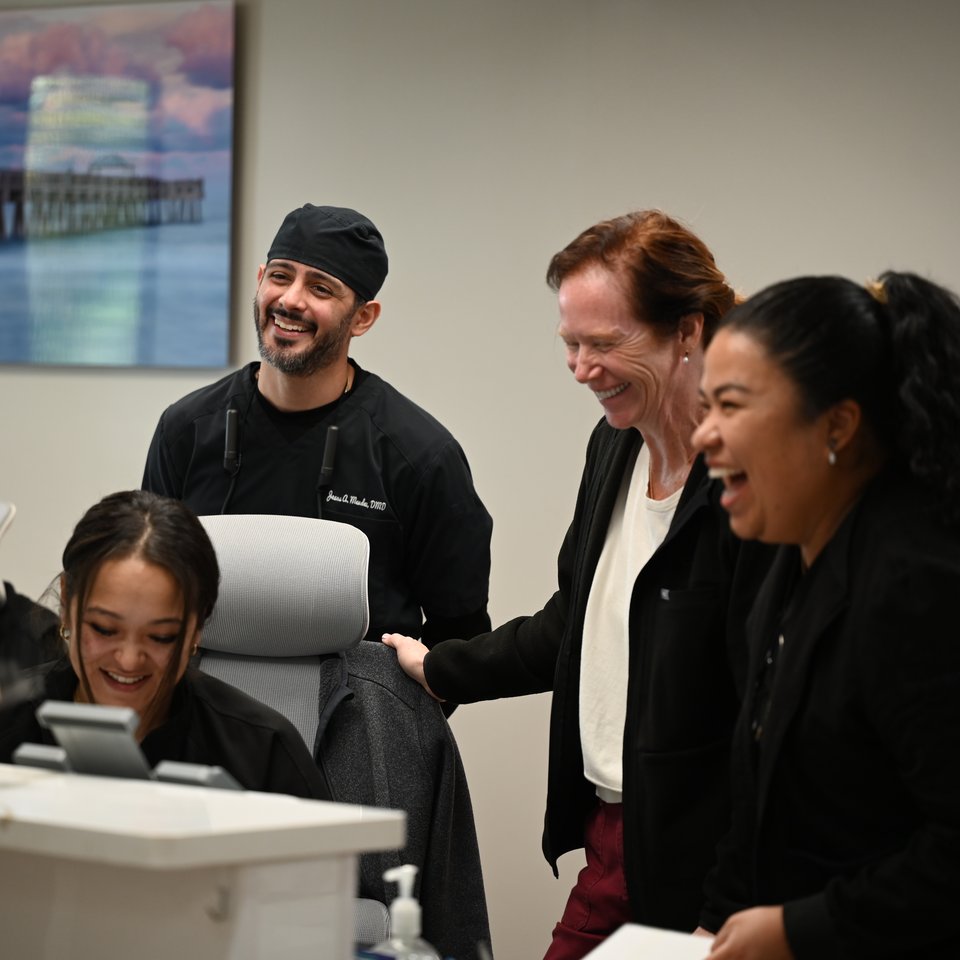
Why Choose Family Dentistry of Stuart for Full Arch Dental Implants?
Patients choose our Stuart office for full-arch care that is planned carefully and explained clearly.
- All-on-X Training: Dr. Mendez has training in dental implants and full-arch rehabilitation, including the All-on-X treatment concept.
- 3D CBCT Planning: CBCT imaging helps us map your jawbone and place each implant where it offers the most support.
- Fixed and Removable Options: We explain both designs so you can choose what fits your lifestyle and budget.
- Insurance and Financing: We accept all PPO plans and most Medicare plans and offer flexible financing options.
Book a Full Arch Implant Consultation in Stuart
If you are ready to explore full arch dental implants, the Family Dentistry of Stuart team is here to help. We offer Saturday appointments, online booking, and financing options to make care more accessible.
A consultation is the first step toward learning whether full arch implants are right for you. Contact our office today to schedule your visit and take the next step toward a complete, functional smile.
Medically reviewed by Dr. Casel, DMD on