A single tooth implant replaces one missing tooth with a fixed, natural-looking restoration. It replaces both the root and the visible crown, so you can eat, speak, and smile with confidence without reshaping the teeth next to the gap.
Dr. Daniel M. Casel restores implants with custom crowns, drawing on his documented experience with implant restorations and full zirconia crowns, and Dr. Michelle Kuznia is a member of the American Academy of Implant Dentistry. Together with the Family Dentistry of Stuart team, they plan each implant so the final tooth blends with your smile.
“Replacing one missing tooth with an implant protects the healthy teeth next to it. My goal is a restoration that blends in so well with your smile that it simply feels like yours.” — Dr. Casel
What Single Tooth Implants Replace
A single tooth implant replaces a missing tooth from root to crown. The implant fixture is a small post placed in the jawbone, where it fuses with the bone over time. An abutment connects the fixture to a custom crown that matches the shape and shade of your natural teeth.
This three-part system restores the full structure of the tooth, not just the part you see above the gumline. Because the implant replaces the root, it can help preserve the jawbone and keep neighboring teeth from shifting into the open space.
Who May Consider Single Tooth Implants
Adults with one missing tooth or a tooth that cannot be saved often consider a single tooth implant. Good candidates generally have healthy gums, enough jawbone to support the implant, and a commitment to daily oral care. Certain health conditions, active gum disease, or heavy smoking can affect healing and may need to be addressed first.
We review your overall health and dental history, and diagnostic imaging helps determine whether an implant is right for you. If bone volume is insufficient, a bone graft may be discussed as a preparatory step.


The Single Tooth Implant Process
Your implant treatment starts with a thorough consultation at our Stuart office. We examine your teeth and gums, review 3D scans when clinically indicated, and talk through your goals and questions. If a damaged tooth still remains, extraction may be performed first, and in selected cases the implant can be placed during the same visit.
After the implant fixture is placed, a healing period of several months allows the bone and implant to fuse securely. A temporary tooth can often be worn during this phase. Once healing is complete, the final crown is attached.
How Crowns Complete Your Implant Restoration
The crown is the visible part of your implant restoration and is custom-made to match your natural teeth in color, shape, and size. After the implant has integrated with the jawbone, we take digital impressions, and our group’s shared dental lab in Jupiter fabricates the crown.
Once the crown is ready, it is secured to the abutment and checked for fit, bite, and appearance. The result is a fixed tooth that looks and functions like the rest of your smile.
A very nice staff and Doctor took great care of me. Never having anything this serious before I was a bit nervous, not too worry I was in great, competent Doctor and assistant staff. I’d recommend to anyone I know if they need competent Doctors and staff in this field.
Planning Implants With CBCT Imaging
Careful planning helps us place implants precisely and predictably. When clinically indicated, CBCT imaging gives a three-dimensional view of bone structure, nerve location, and sinus position, so your implant can be positioned for strength and a natural result.
Single Tooth Implants Compared With Bridges
A single tooth implant and a fixed bridge are two common ways to replace one missing tooth. A bridge uses the adjacent teeth for support and requires reshaping those teeth to hold the restoration. An implant stands on its own and does not involve the neighboring teeth.
Implants can also help preserve jawbone, while bridges do not replace the root. The implant process takes longer and involves surgery, but many patients prefer keeping their adjacent teeth intact. We discuss both options, including the timeline, investment, and long-term maintenance for each choice.

Frequently Asked Questions About Single Tooth Implants
-
Most adults with healthy gums and enough jawbone can be candidates. Active gum disease, some health conditions, and heavy smoking can affect healing and may need attention first. A CBCT scan and exam help us confirm whether an implant is right for you.
-
The full process usually takes several months, because the implant needs time to fuse with the jawbone before the final crown is attached. Timing varies with your healing and whether grafting is needed.
-
In selected cases, yes. If the bone and gums are healthy enough, the implant may be placed at the extraction visit. Otherwise, the site heals first, sometimes with a bone graft, before the implant is placed.
-
Usually not. A temporary tooth can often be worn during healing so you are not left with a visible space, especially for front teeth.
-
Both can work well. An implant stands on its own and does not involve the neighboring teeth, while a dental bridge is usually faster and avoids surgery. We will explain the pros and cons of each for your situation.
-
Brush twice a day, floss or use a water flosser around the implant, and keep regular checkups and cleanings. Healthy gums are essential to keeping an implant stable for the long term. See our implant cost guide for planning information.
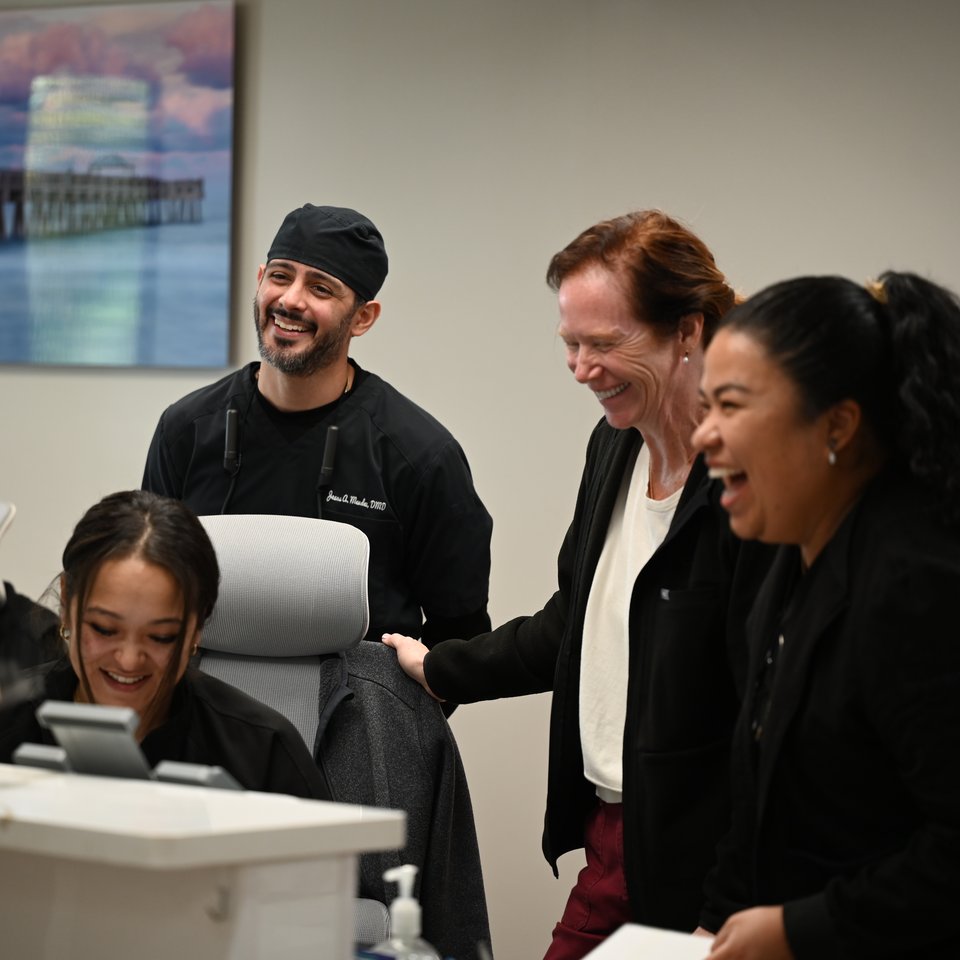
Why Choose Family Dentistry of Stuart for Single Tooth Implants?
Patients choose our Stuart office for implant teeth that look natural and are planned with care.
- Implant Restoration Experience: Dr. Casel has documented experience restoring implants with custom crowns.
- 3D CBCT Planning: CBCT imaging helps us position each implant around your bone, nerves, and sinus.
- Natural-Looking Crowns: Our group’s dental lab in Jupiter makes crowns shaded to match your surrounding teeth.
- Focus on Gum Health: Healthy gums help keep your implant stable, so we look after the tissue around it at every visit.
- Saturday Appointments: Weekend hours make it easier to fit consultations and follow-up visits into your schedule.
- Insurance and Financing: We accept all PPO plans and most Medicare plans and offer flexible financing options.
Schedule a Single Tooth Implant Consultation in Stuart
If you are missing one tooth and want a fixed, natural-looking replacement, the Family Dentistry of Stuart team can walk you through your options. We offer Saturday appointments, online booking, and financing options to make care easier to fit into your life.
A single tooth implant consultation in Stuart gives you a clear picture of your oral health, your options, and a plan built around your needs. Call or schedule online to take the first step toward a complete smile.
Medically reviewed by Dr. Casel, DMD on