Teeth naturally lose their brightness over time, and professional teeth whitening is one of the simplest ways to bring back a lighter, more vibrant smile. We offer dentist-supervised in-office and take-home whitening for surface stains and many types of deeper discoloration in Stuart, FL.
Dr. Michelle Kuznia, our cosmetic dentist, earned her Doctor of Dental Surgery with honors from the University of Detroit Mercy School of Dentistry and is a member of the American Academy of Facial Esthetics. She and the Family Dentistry of Stuart team explain why your teeth have changed color and which whitening approach fits your smile.
“Whitening works best when we plan it around your existing crowns and fillings. A quick exam first helps make sure the result looks even and natural.” — Dr. Kuznia
What Causes Teeth to Become Yellow or Discolored
Tooth discoloration often begins when enamel, the hard outer layer, gradually wears thin. As enamel becomes more translucent, the dentin underneath shows through. Dentin is naturally yellow, and its increased visibility gives teeth a darker or more yellow appearance. Everyday habits also contribute. Coffee, tea, red wine, and tobacco use can leave surface stains that build up over the years. Some medications and dental trauma may cause discoloration that starts inside the tooth structure. A dentist can examine your teeth and help identify which factors are most relevant to your case.
How Teeth Whitening Works
Teeth whitening uses peroxide-based gels to break down colored compounds within the tooth. Hydrogen peroxide and carbamide peroxide are the two most common active ingredients. When the gel contacts the tooth surface, it releases oxygen molecules that penetrate enamel and reach the discolored dentin layer.
Those molecules break apart the chemical bonds that hold stains together, which lightens the overall tooth color. The process does not damage the tooth structure, though it may cause temporary sensitivity for some people. During professional whitening, a dentist controls the gel strength and how it is applied to support comfort.
What to Expect During In-Office Whitening
In-office whitening is designed to produce a noticeable color change in a short visit, often within about an hour. The dentist begins by placing a protective shield over the gums to keep the soft tissue isolated. A high-concentration peroxide gel is then applied directly to the teeth. The gel stays on for a controlled period, and the dentist monitors the process throughout.
Some protocols refresh the gel in cycles during the same appointment. Because we supervise the procedure, we can address sensitivity and adjust treatment as needed. This option suits people who want faster results with minimal at-home steps.


How Dentist-Provided Take-Home Kits Work
A dentist-provided take-home whitening kit uses a lower-strength peroxide gel than the in-office version. The gel is placed in custom trays made to fit your teeth, which helps keep the whitening agent in even contact with the enamel. Most people wear the trays for a couple of hours each day or overnight, depending on the product and the dentist’s instructions.
The full course typically runs for a few days to a few weeks. Because the gel strength is lower, the whitening happens more gradually. This approach gives you control over the timing and lets you whiten at home while still following a dentist-supervised plan.
How the Two Dentist-Provided Options Differ
The options differ mainly in how quickly they work and the strength of the whitening gel. In-office treatment uses a stronger gel applied by the dentist, so the color change is faster and happens in a single appointment. Take-home kits use a milder gel worn over a longer period, which produces a more gradual shift.
A dentist provides and supervises both options and checks your teeth and gums first. The choice often comes down to your timeline, your sensitivity level, and whether you prefer to whiten at the office or on your own schedule at home.
Had an awesome experience! My dentist was so nice and made me feel so comfortable! Will definitely be my permanent dentist from now on!
Which Types of Tooth Discoloration May Respond
Whitening tends to work well on yellowish discoloration caused by aging, food and drink stains, or tobacco use. These are often extrinsic stains that sit on or just below the enamel surface. Brown or gray tones, and discoloration from certain medications or trauma, may be more resistant because the staining is deeper inside the tooth.
It is also important to know that whitening does not change the color of existing crowns, veneers, fillings, or bonding material. A dentist can assess your specific type of discoloration and give you a realistic idea of how your teeth may respond before you begin treatment.
How a Dentist Helps Choose a Whitening Approach
A dental examination is the starting point for choosing between in-office and take-home whitening. The dentist looks at the cause and depth of the discoloration, checks for cavities or gum concerns that should be addressed first, and discusses your goals and timeline. If you have restorations on visible teeth, the dentist can explain how whitening will interact with those surfaces. Your sensitivity history also plays a role, and this evaluation helps match you with the option that fits your teeth and your lifestyle.

Frequently Asked Questions About Teeth Whitening
-
Results depend on the cause of the discoloration. Yellowish stains from aging, coffee, tea, or tobacco often lighten well, while gray or brown tones from medications or trauma may respond less. We give you a realistic idea of your likely result before you start.
-
Some people feel temporary sensitivity during or after whitening. It usually fades within a day or two. We adjust the gel strength or timing if sensitivity is a concern, and a toothpaste for sensitive teeth can help.
-
No. Whitening only works on natural tooth enamel, so crowns, veneers, fillings, and bonding keep their current shade. If those restorations are on front teeth, we plan whitening around them so your smile looks even.
-
Dentist-supervised whitening uses custom trays or a controlled in-office gel and starts with an exam to rule out cavities or gum problems. That usually means more even results and better control of sensitivity than one-size-fits-all strips.
-
Many people enjoy their results for months or longer. Coffee, tea, red wine, and tobacco can bring stains back sooner, and occasional take-home touch-ups can help maintain your shade.
-
Not always. Deep internal stains may not lighten enough with whitening alone. In those cases, dental veneers or bonding may be better options.
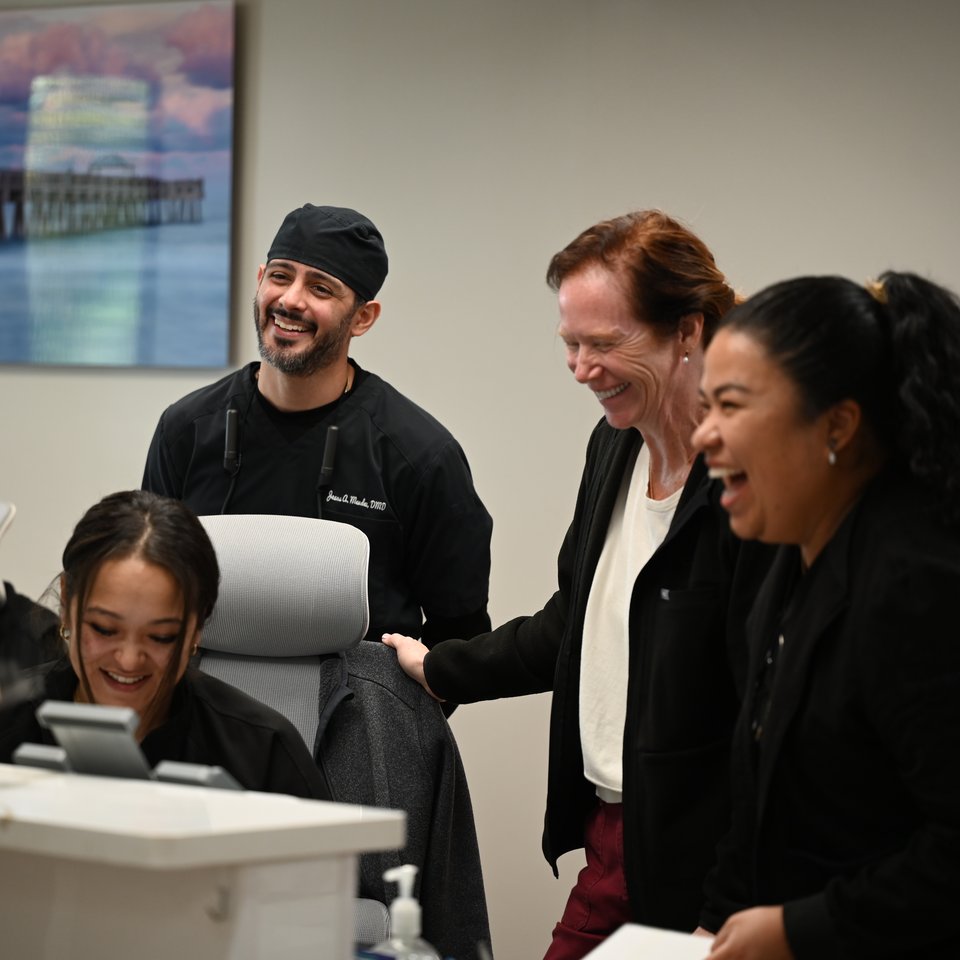
Why Choose Family Dentistry of Stuart for Teeth Whitening?
Patients choose our Stuart office for whitening that is safe, supervised, and planned around their smile.
- Dentist-Supervised Whitening: We check your teeth and gums first and monitor every in-office treatment.
- In-Office and Take-Home Options: Choose faster results in one visit or gradual whitening on your own schedule.
- Planned Around Your Restorations: We explain how whitening will look next to existing crowns, veneers, and fillings.
- Comfort-Focused Care: We adjust treatment if you are prone to sensitivity.
- Saturday Appointments: Weekend hours make it easy to fit whitening into a busy week.
Ask Family Dentistry of Stuart About Teeth Whitening in Stuart, FL
If you are ready for a brighter smile, the Family Dentistry of Stuart team is here to help. We offer both in-office and take-home whitening in Stuart, FL, with Saturday appointments and online booking to make scheduling easier. A consultation is the best way to learn which whitening approach suits your teeth and your goals.
Medically reviewed by Dr. Casel, DMD on